LGBTQ+ and Religion: How to Find an Inclusive Faith Community
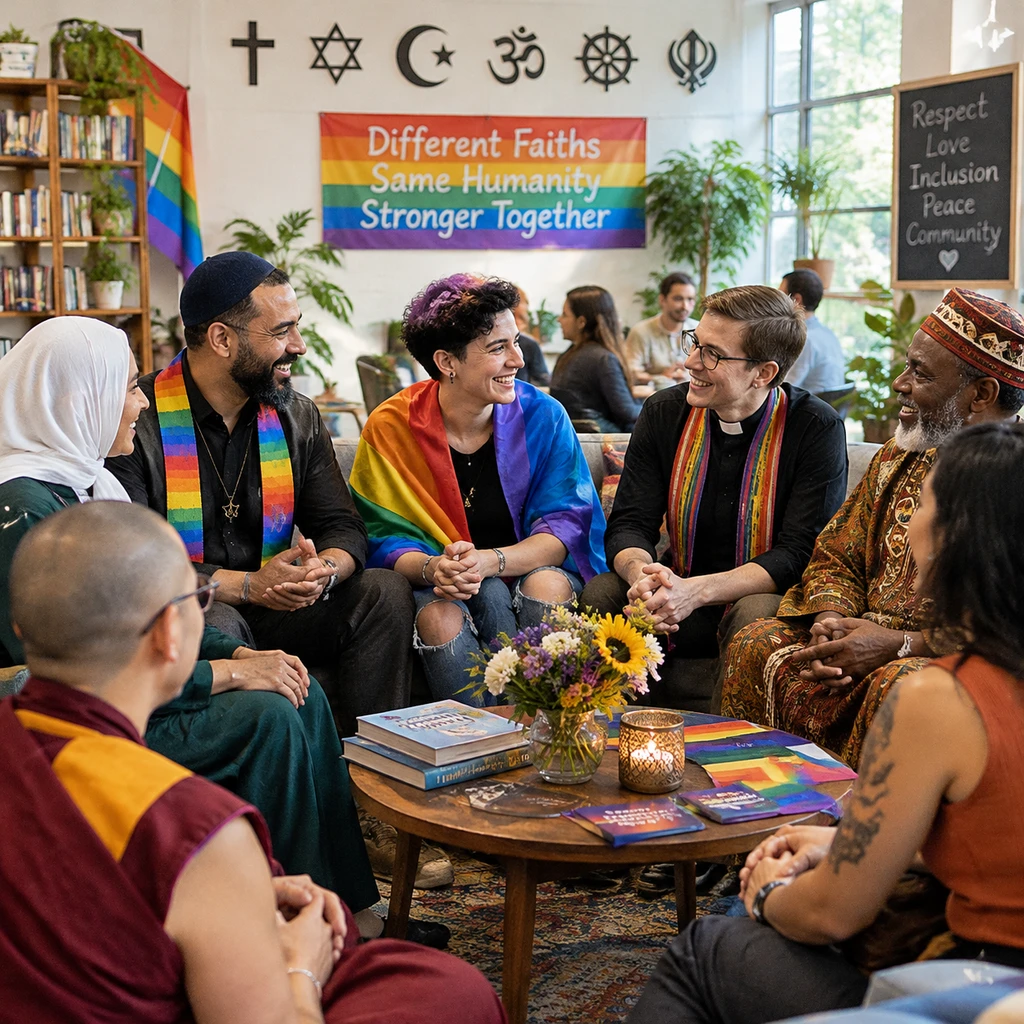
Faith and LGBTQ+ identity do not have to be in conflict, though people’s experiences vary widely. Some find spiritual belonging in LGBTQ+ affirming congregations; others shape a personal practice outside an institution, or take a break from religion altogether. There is no single right path.
If you are looking for community, it helps to assess more than a welcoming slogan. Consider how a congregation treats LGBTQ+ people in leadership, worship, relationships, and everyday community life. You can explore at your own pace, share only what feels safe, and change course whenever you need to.
What an inclusive faith community can look like
An inclusive faith community welcomes LGBTQ+ people with dignity and makes room for their full participation. What that looks like depends on the religious tradition, congregation, and individuals involved.
Some communities explicitly celebrate LGBTQ+ identities and relationships, perform or bless same-gender marriages, and include LGBTQ+ clergy and leaders. Others may offer a respectful welcome while holding more traditional theological views. The word “affirming” can mean different things in different settings, so it is useful to ask what a community’s welcome means in practice.
Religious traditions are not monolithic. Even within one denomination, congregations may interpret teachings differently and set their own policies. A community’s approach may also change over time as members and leaders work through questions of inclusion.
Look for signs of belonging beyond attendance: Can LGBTQ+ members participate in rituals, serve on committees, bring partners to events, and be open about their lives without being treated as a special case? A congregation can be warm and welcoming while still having limits that matter to you. Understanding those limits is part of making an informed choice.
Start with what you want from faith and community
Start by naming what you hope to find: a particular spiritual tradition, regular worship, supportive relationships, or simply a place to ask questions. Knowing your priorities can help you find a community that fits your needs now.
You do not need a complete spiritual plan before you begin. You might be drawn to a tradition you grew up with, curious about a new one, or unsure whether organized religion feels right. Those are all valid starting points. Try separating what you want from faith itself from what you want from community.
- Spiritual practice: Are you looking for prayer, ritual, study, meditation, music, or a connection to a religious tradition?
- Community: Would you value friendships, intergenerational connection, shared meals, volunteering, or LGBTQ+ peer support?
- Inclusion: Do you need explicit support for same-gender relationships, gender diversity, or LGBTQ+ leadership?
- Pace and privacy: Would you prefer to observe quietly before introducing yourself or sharing personal details?
These priorities can shift. Someone might first want a place to worship without hiding a partner, then later seek leadership opportunities or deeper study. Your needs do not have to match anyone else’s, and you can revisit them as you learn more.
How to recognize a genuinely affirming congregation
A genuinely affirming congregation backs its welcome with policies, leadership, and everyday practice. Public language is a useful first clue, but it cannot tell you everything about how people are treated.
Start with the congregation’s website and public materials. Look for a clear non-discrimination policy that names sexual orientation and gender identity, alongside specific information about membership, leadership, ceremonies, and family life. A general statement that “everyone is welcome” may be sincere, but it does not explain whether LGBTQ+ people can participate fully.
Check who speaks for the community and who is visible in its life. LGBTQ+ clergy and leaders can be one sign of inclusion, though no individual should be expected to represent an entire community. Notice whether LGBTQ+ people appear in ordinary settings, rather than only in a special event or outreach campaign.
If you visit, observe how people respond to names, pronouns, partners, and questions. Does the congregation make room for LGBTQ+ members in worship and community life? Are concerns answered directly, or redirected into vague assurances? These observations are not a perfect test, but patterns can be more revealing than a single friendly conversation.
You can also look for established directories and local LGBTQ+ faith networks, then confirm details with the congregation itself. Policies and leadership can change, so ask about current practices rather than relying on an old listing.
Ways to explore a community at your own pace
You can explore an inclusive faith community gradually by gathering information, making a low-pressure first contact, and choosing what to try next. You do not have to commit, disclose personal information, or attend a service before you feel ready.
Begin online, or ask a trusted friend to help you research. If you contact a leader, a short email can clarify key questions before you visit. For example: “I’m looking for a congregation where LGBTQ+ people can participate fully. Could you tell me your policies on membership and leadership?” A direct question gives the community a chance to answer clearly.
Other low-pressure options include attending a public lecture, community meal, or volunteer event; watching a service online; or visiting with someone you trust. If you attend worship, you can sit near an exit, leave early, or simply observe. You are there to learn whether the space suits you, not to prove that you belong.
Afterward, take a moment to note what happened. Did people respect your boundaries? Were answers specific? Did you feel curious, comfortable, tense, or pressured? One visit is only one data point. You can return, ask more questions, or decide the fit is not right.
Protect your boundaries and emotional well-being
Protecting your boundaries means deciding in advance what you want to share and watching how the community responds. You can leave a conversation, event, or congregation if you feel pressured or unsafe.
You are not obligated to disclose your sexual orientation, gender identity, relationship status, or religious history to gain access to a community. Share information only when you choose. If you are concerned about privacy, ask how contact details are stored or whether conversations will be kept confidential.
It may help to set a few personal limits before a visit: what questions you are willing to answer, how long you plan to stay, and who you can contact afterward. If someone uses the wrong name or pronouns, dismisses your relationship, or treats your identity as a debate, you can correct them, seek support, or leave. You do not have to educate anyone in order to deserve respect.
Pay attention to how welcome feels in practice, not only to what a leader promises. A community may offer meaningful support while still having limitations or interpersonal conflict. Choosing to explore it does not require you to accept every teaching or overlook behavior that harms you.
If religion has been a source of hurt
If religion has caused you pain, you do not have to return to a religious setting or reconcile with a group to heal. Support can come from affirming peers, an LGBTQ+-affirming counselor, trusted loved ones, or a spiritual community you choose later.
Experiences of rejection, shame, or coercion can affect how safe worship and religious language feel. Some people describe this as religious trauma; others use different words or do not identify with that term. You get to name your own experience. There is no required timeline for returning to faith, and stepping away can be a healthy choice.
If you want help, consider asking a counselor about their experience supporting LGBTQ+ clients and whether they respect your beliefs, including uncertainty or a decision not to practice. Peer groups can also offer a place to speak with people who understand the tension between religious history and identity. Choose support that does not pressure you to forgive, return, or adopt a particular interpretation.
Chosen family can provide care and connection while you decide what spiritual belonging means for you. That may include LGBTQ+ friends, affirming relatives, a faith community, or people outside religion. You can build a meaningful life with or without an institutional home.
Frequently asked questions
What does “affirming” mean in a faith community?
“Affirming” usually means LGBTQ+ people are respected and can participate without being asked to hide or change who they are. The exact meaning varies, so ask about policies, leadership, relationships, and participation in worship.
What questions can I ask before attending?
Ask whether LGBTQ+ people can join, serve in leadership, bring partners, and take part in ceremonies. You can also ask about non-discrimination policies, confidentiality, and the congregation’s approach to gender identity. Choose only the questions that matter to you.
How can I tell whether a congregation’s welcome is meaningful?
Compare public statements with current policies and everyday practice. Look for consistent inclusion in worship and community life, and notice whether leaders answer direct questions without evasion. A single visit may not settle the question, so take time to assess patterns.
What if I want spiritual community but have been hurt by religion?
Move slowly, or do not return if that feels right. You can explore peer support, an LGBTQ+-affirming counselor, or low-pressure community events without committing to a congregation. Your safety and autonomy come first.